SPN 3720 FMI 15 fault code explained and how to fix it
SPN 3720 FMI 15 explained in simple terms. Learn what causes it, how it affects your engine, and the right steps to fix it fast.


SPN 3720 FMI 15 explained in simple terms. Learn what causes it, how it affects your engine, and the right steps to fix it fast.
SPN 3720 FMI 15 indicates that the Diesel Particulate Filter (DPF) has reached its maximum ash load capacity and requires service. This fault is common on Cummins engines and appears when the ECM calculates that the ash accumulation inside the DPF has exceeded the allowable threshold.
When it stays active, it typically shows up as a check engine light with progressive derate and more frequent regenerations that stop improving performance.
Unlike soot, ash cannot be burned off through regeneration. When this code becomes active, cleaning or replacement of the DPF is required.
SPN 3720 refers to the DPF ash load parameter.
FMI 15 means data valid but above normal operating range.
In practical terms, this means:
Ash is the non-combustible residue left behind after soot is burned during regeneration. Over time, it builds up permanently inside the filter substrate.
When this code is present, operators may notice:
This is a maintenance-driven fault, not a sudden electrical failure.
This fault occurs when ash accumulation reaches the calibrated service threshold. Common contributing factors include:
It is important to understand that this is not typically caused by a failed sensor. It is a calculated load value stored by the ECM.
Repair works best when it follows a consistent sequence, because cleaning alone will not clear the fault unless the ECM value is also reset.
The DPF must be removed and professionally cleaned using an approved thermal cleaning or baking process. This restores flow by removing accumulated ash.
Before reinstalling the DPF, inspect for:
If upstream issues exist, ash loading will return prematurely.
After cleaning or replacing the DPF, the ash load counter must be reset using Cummins INSITE or approved diagnostic software.
If this step is skipped, the fault will remain active even after cleaning.
No. A regeneration burns soot, not ash.
SPN 3720 FMI 15 specifically indicates ash capacity has been exceeded. Only removal and cleaning or replacement will resolve the fault.
Prevention is maintenance-based:
Tracking these patterns across a fleet is where most operations fail.
This fault is directly tied to maintenance planning and service tracking, not random sensor failure.
Clue’s Preventive Maintenance solution allows fleets to schedule DPF service intervals based on engine hours or mileage so ash capacity limits are not exceeded unexpectedly.
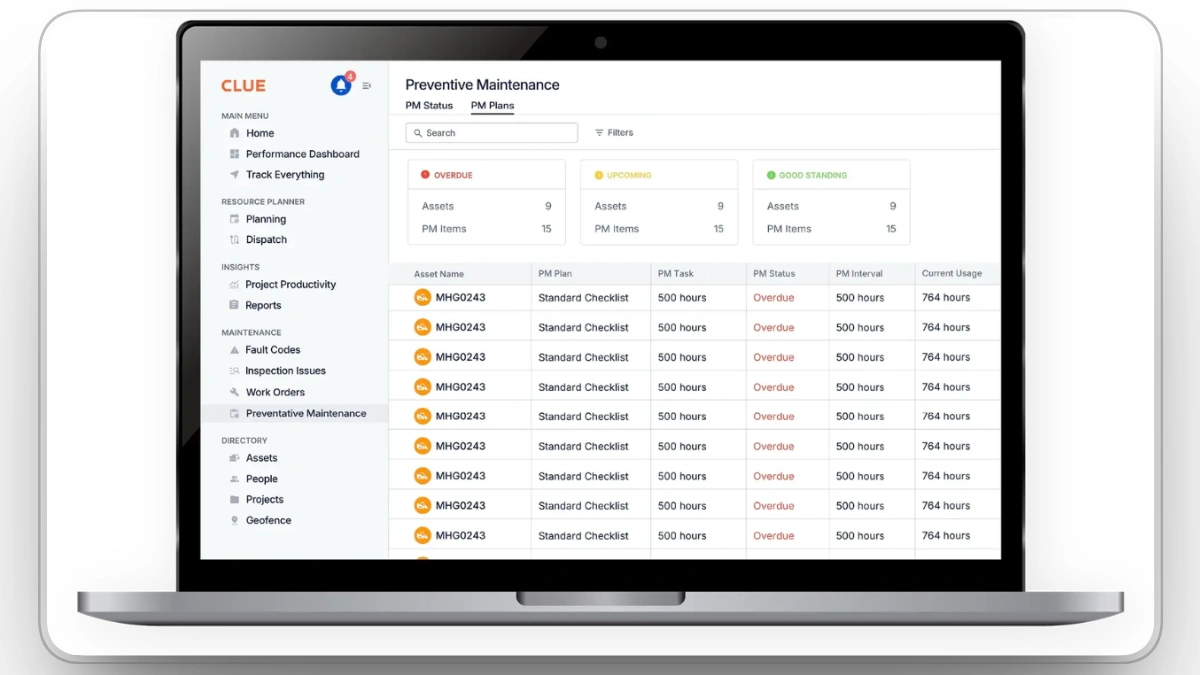
Clue’s Equipment Maintenance solution ensures DPF removals, cleanings, and ash counter resets are documented properly, reducing repeat faults caused by missed reset procedures.
The real value here is visibility. When DPF cleanings are tracked consistently across units, surprise derates drop significantly.
Not necessarily. It means the DPF is full of ash. In most cases, professional cleaning restores functionality unless the substrate is damaged.
Most heavy-duty applications require cleaning between 200,000 and 400,000 miles, but duty cycle and idle time significantly affect this interval.
Always confirm the correct service interval in the OEM maintenance schedule for the specific engine and duty cycle.
The engine will progressively derate. Continued operation can lead to severe power limitation and possible downtime.
No. SPN 3720 FMI 15 is typically a calculated ash load value, not a sensor voltage or wiring fault.
No. Many DPF units can be professionally cleaned multiple times before replacement is required.