What is SPN 5018 FMI 18 & How to Solve It?
Understand SPN 5018 FMI 18 fault code, what it means, common causes, and simple steps you can take to fix it and prevent it in the future.


Understand SPN 5018 FMI 18 fault code, what it means, common causes, and simple steps you can take to fix it and prevent it in the future.
SPN 5018 FMI 18 is a Diesel Oxidation Catalyst (DOC) efficiency fault commonly seen on Detroit Diesel GHG14 aftertreatment systems. It indicates that exhaust temperature behavior does not match expected DOC performance, meaning one or more sensors are showing inconsistent or invalid temperature data. This discrepancy often triggers the malfunction indicator light (MIL) and can result in up to a 25% engine derate. A proper parked regeneration verification is required to confirm the fix.
This code does not automatically mean the DOC itself is defective. Instead, it signals an aftertreatment control condition where the controller has detected abnormal exhaust temperature behavior inside the DOC. Before the DOC is replaced, the OEM diagnostic process prioritizes:
The DOC depends on accurate exhaust temperature data to function correctly. If sensors provide inaccurate readings or contamination affects catalyst efficiency, the controller flags this fault. A detailed look at Detroit Diesel aftertreatment diagnostics shows how DOC performance and sensor agreement logic work.
Operators and technicians typically observe one or more of the following when this fault is active:
These symptoms together point to a DOC or temperature sensing issue, not just a single sensor misread.
The following values come directly from the Detroit Diesel GHG14 troubleshooting approach:
Running a parked regeneration and verifying temperature targets is often the final step in confirming a repair.
Connect Detroit Diesel diagnostic software and clear or address other active codes first. Only proceed with the repair if SPN 5018 FMI 18 remains active.
Monitor live data for:
If these are within 25 °C (77 °F) of each other, proceed to pressure sensor checks. If not, inspect the DOC outlet temperature sensor and wiring first.
Look for:
Repair any issues found. If connectors and wiring test fine but temperatures still disagree, replace the DOC outlet temperature sensor.
Measure:
If either voltage is outside 0.44–0.56 V, inspect connectors and replace the sensor if necessary.
If all sensors and wiring check out but the fault persists, investigate contamination sources such as:
Always correct upstream causes before replacing aftertreatment components.
Run a parked regeneration following OEM safety procedures. A successful repair shows DOC outlet temperature within 100 °C (212 °F) of the expected model regen profile.
If the regen fails to verify, collect diagnostic logs and escalate per OEM guidelines.
When aftertreatment faults persist across shifts, the real efficiency gain comes from workflow and visibility, not just tools:
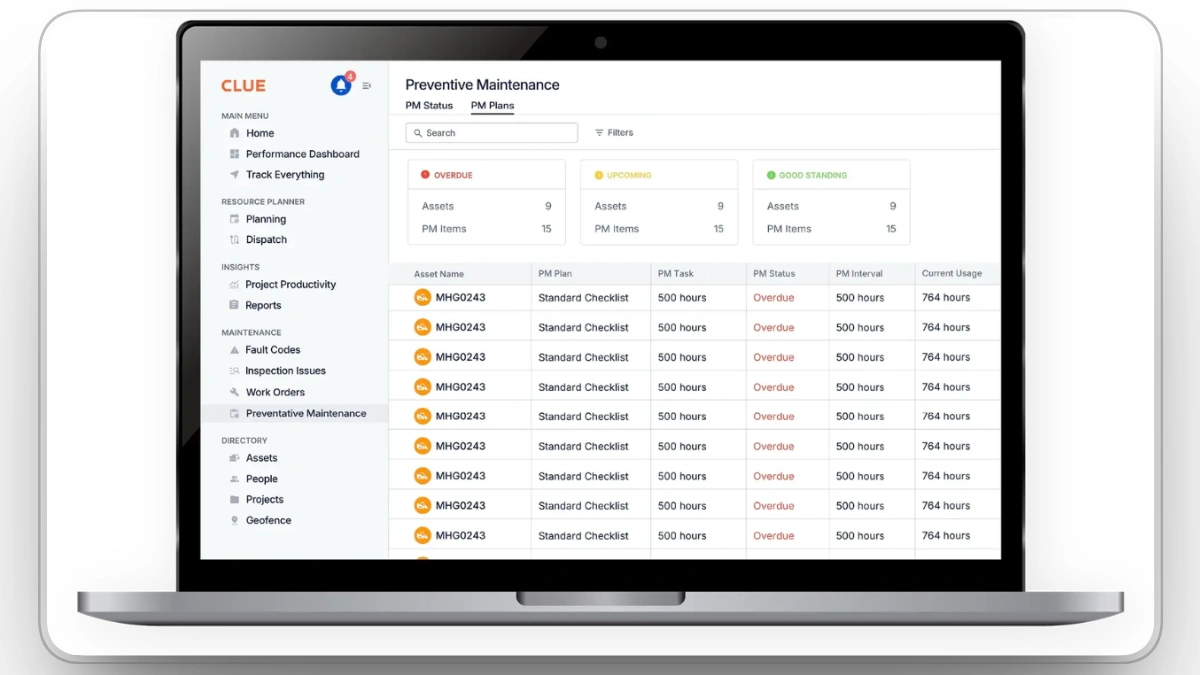
Clue’s Preventive Maintenance solution lets you schedule recurring checks on aftertreatment wiring, sensors, and connectors so you catch degradation before it becomes a fault.
Clue’s Work Order and Inspection tools enable you to:
This structured approach helps close issues faster and reduces repeat truck visits for the same fault.
No. Inconsistent sensor data, wiring faults, pressure sensor issues, or contamination are far more common triggers for this fault than a defective DOC itself.
The aftertreatment controller reduces engine power when DOC performance doesn’t meet expected temperature behavior, protecting emissions systems and preventing damage.
A parked regeneration that meets OEM temperature verification criteria confirms resolution.
Yes. Corroded connectors or unstable voltage readings often trigger this fault before any catalyst hardware fault.
Pressure sensor voltages outside 0.44‑0.56 V indicate signal problems that directly affect how the controller interprets aftertreatment dynamics.
Temperature and pressure sensors should be part of routine aftertreatment system maintenance, especially on vehicles with high duty cycles.